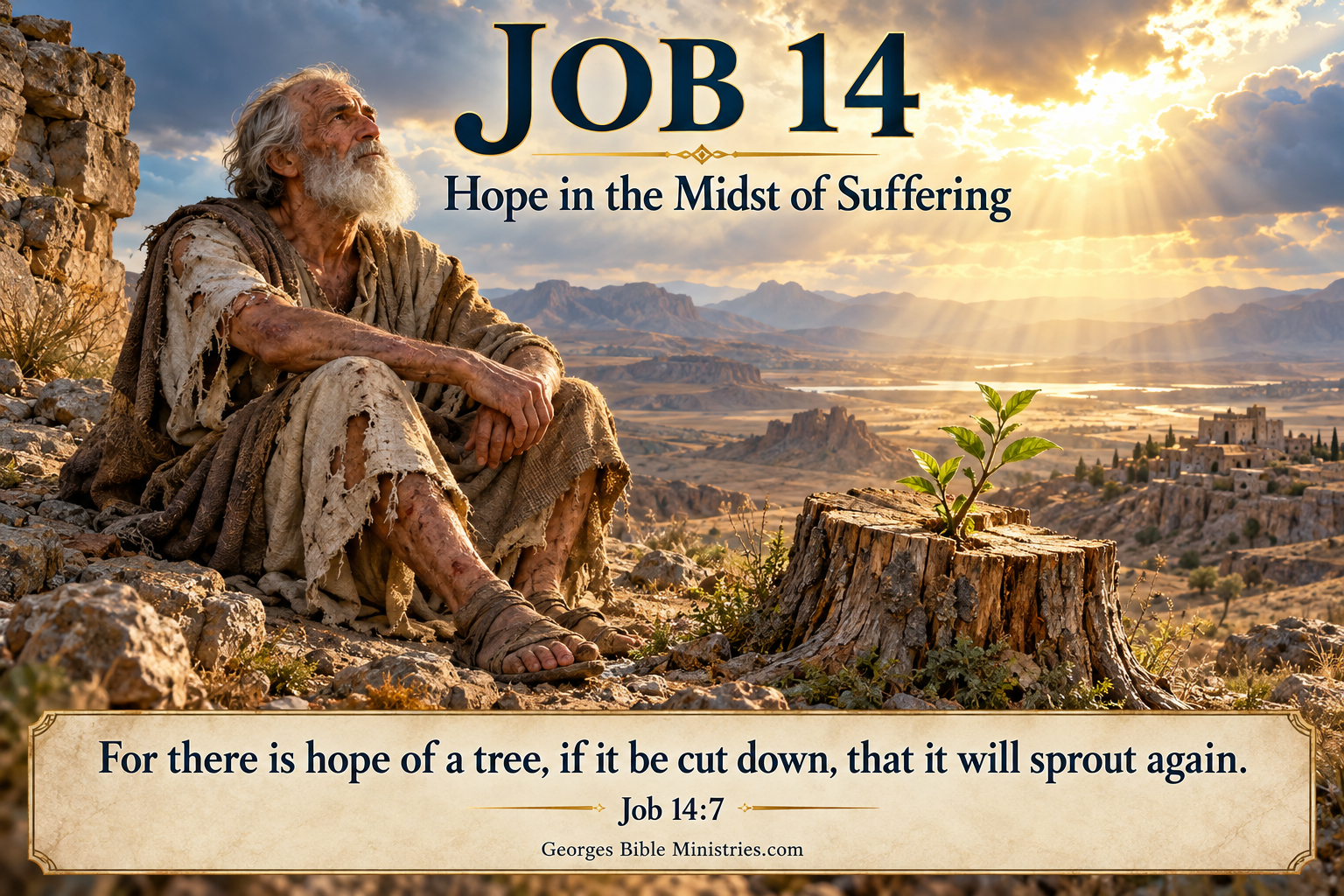
Job 14 — Life Is Short, but Is There Hope Beyond Death?
In Job chapter 14, Job continues speaking to God. He is suffering deeply and reflects on how brief and troubled human life can be. His words move between sorrow, questions, and a longing for God to remember him.
1. Life is brief and full of trouble — verses 1–6
“Man that is born of a woman is of few days, and full of trouble.”
— Job 14:1, KJV
Job compares human life to a flower that blooms and soon withers, and to a shadow that quickly passes. He feels fragile and wonders why God would bring such a weak creature into judgment.
When Job asks, “Who can bring a clean thing out of an unclean?” he acknowledges human impurity and limitation.
He recognises that our days are known to God. In his distress, he asks God to give him some relief, like a labourer finding rest at the end of a difficult day.
The lesson: Life is precious because it is short. Our weakness should lead us to depend on God and show compassion towards others.
2. A cut-down tree can grow again — verses 7–12
Job observes that even a tree cut down may send out fresh shoots. Though its roots grow old, water can bring new growth.
But when a person dies, Job cannot see the same visible return to life. He asks:
“But man dieth, and wasteth away: yea, man giveth up the ghost, and where is he?”
— Job 14:10, KJV
These are the questions of a grieving man trying to understand death. Job’s words express his struggle; they should not be treated as the Bible’s complete teaching about resurrection.
The lesson: Suffering can leave us with questions we cannot answer. We can bring those questions honestly before God.
3. Job longs for God to remember him — verses 13–17
Job wishes God would hide him in the grave until His anger had passed, then appoint a time to remember him. Job feels that God is angry with him, although the opening chapters show that his suffering is not punishment for some secret wickedness.
Then comes his great question:
“If a man die, shall he live again?”
— Job 14:14, KJV
Job imagines waiting until his “change” comes. In context, this expresses a longing for renewal or release; it is not yet a fully developed statement of resurrection faith.
Yet verse 15 contains a tender thought:
“Thou shalt call, and I will answer thee: thou wilt have a desire to the work of thine hands.”
— Job 14:15, KJV
Job longs to hear God call him again. He wants to believe that his Creator still cares for the person He has made. He also pictures his sins being sealed away and covered, expressing his longing for forgiveness and restored fellowship.
The lesson: Even beneath Job’s despair, there remains a desire for God. He does not merely want his pain to end; he wants his relationship with God restored.
4. Suffering wears away his hope — verses 18–22
Job compares his suffering to mountains crumbling and water wearing away stones. He feels that his hope is being worn away in the same way.
He reflects on death separating people from the events of their families’ lives. The chapter ends with pain and mourning rather than a confident answer.
The lesson: Faithful people can experience deep discouragement. Job’s anguish reminds us to comfort those who suffer instead of assuming that their sorrow proves a lack of faith.
What does Job 14 teach us today?
This chapter reminds us that life is short, suffering is real, and the human heart longs for hope beyond the grave.
For Christians, the question Job asks finds a clearer answer in Jesus Christ:
“I am the resurrection, and the life: he that believeth in me, though he were dead, yet shall he live.”
— John 11:25, KJV
Job could not yet see that answer clearly. Nevertheless, through his tears, he longed for God to call him and remember him.
A prayer
Lord, when life feels short and full of trouble, help us to trust You. Give comfort to those who grieve, strength to those who suffer, and hope through Jesus Christ. When we cannot understand Your ways, help us bring our questions to You and rest in Your care. Amen.
For Georges WebMinistries
12th October 2026
Leave a Reply